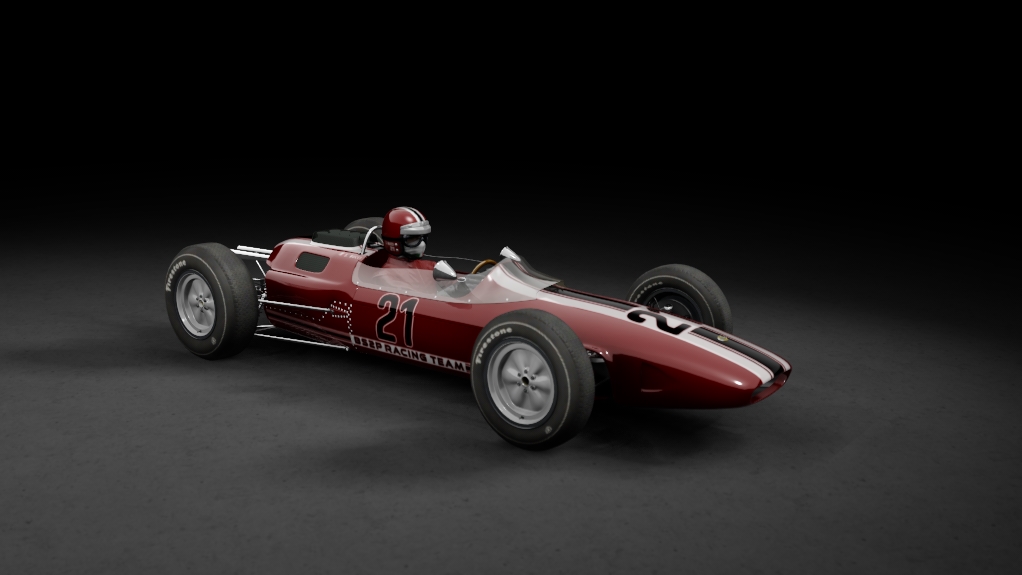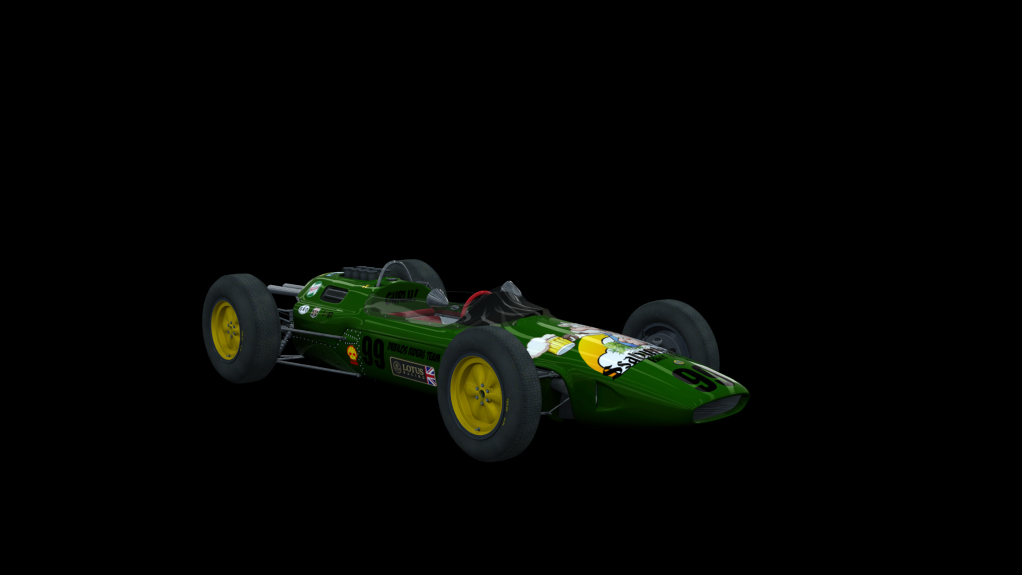
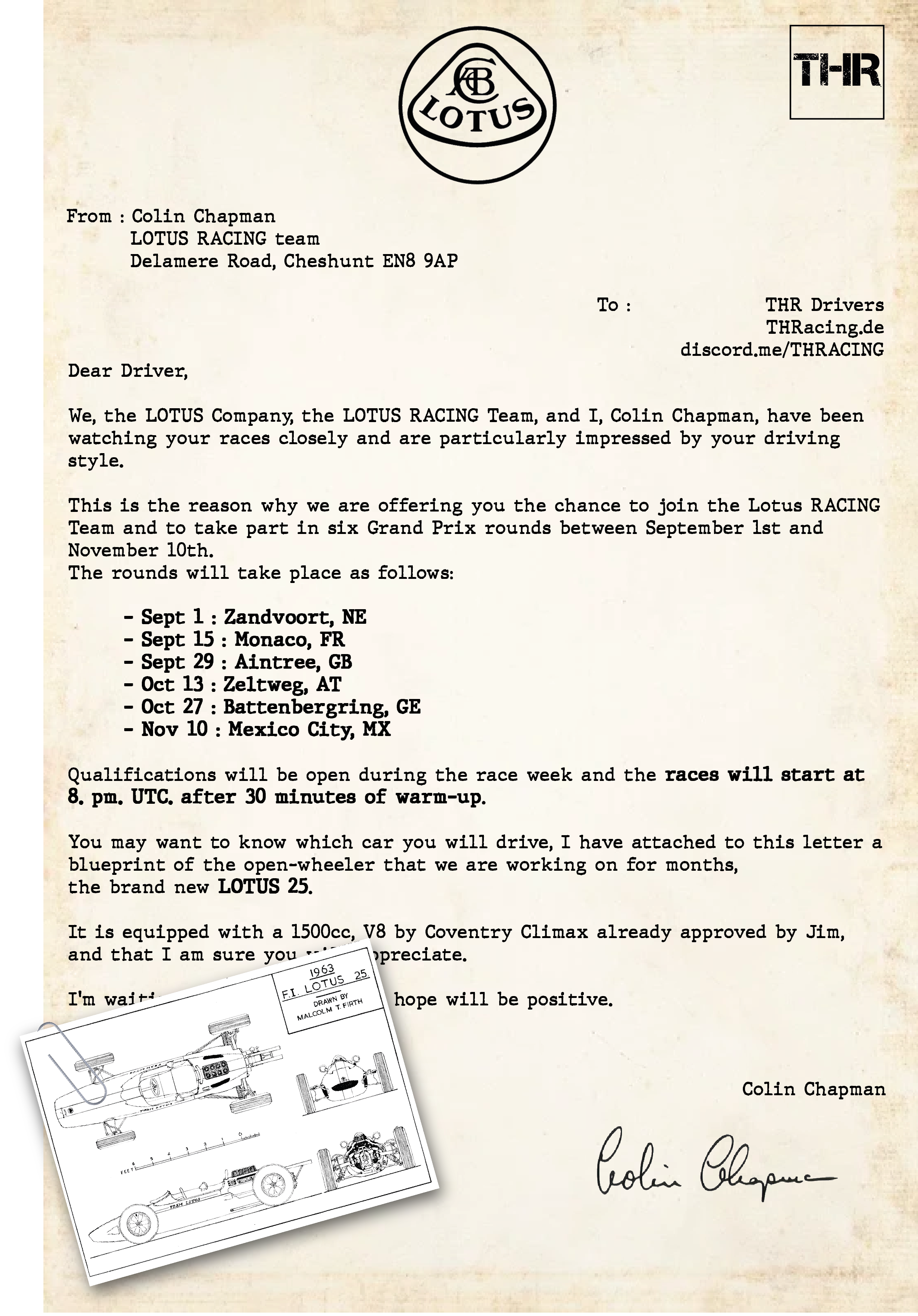
Lotus 25 Cup: FMG Sets the Standard
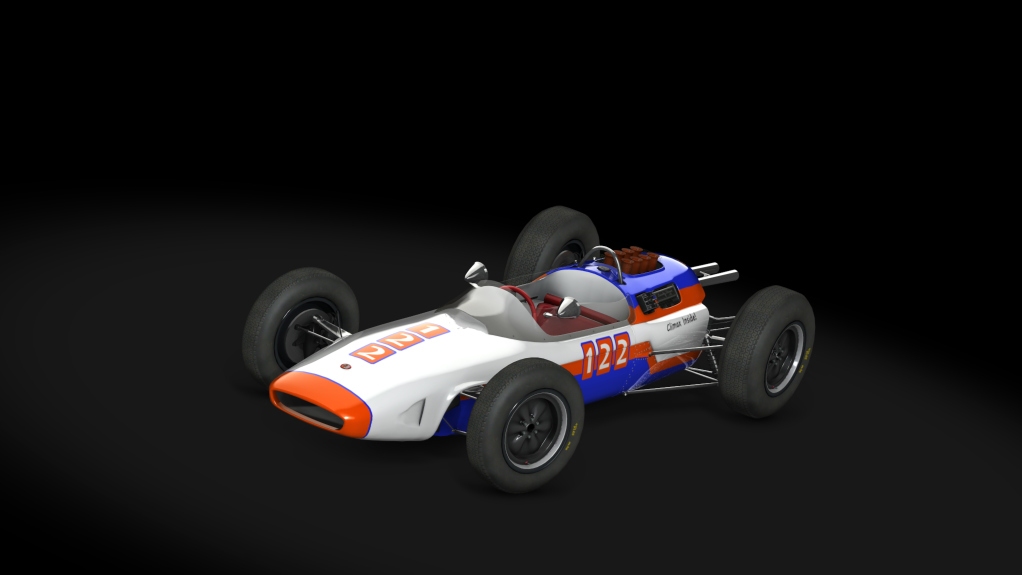
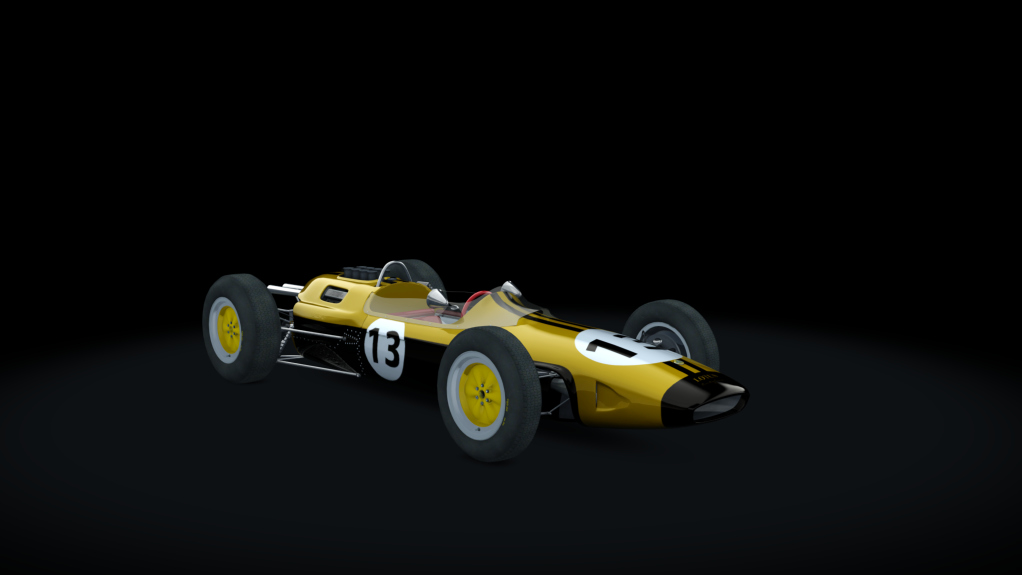
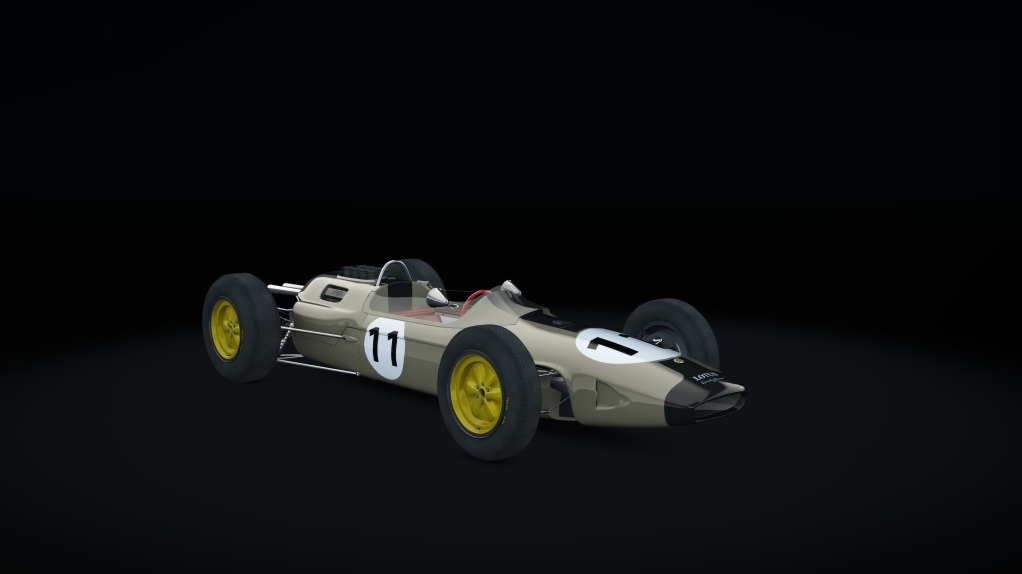
Four victories gave FMG the Lotus 25 Cup, but the shape of the Championship was less straightforward than that record suggests. Double made the opening impression, Florian Masse sustained the pursuit, and Flashor interrupted the champion's winning run. Across six rounds, speed and regularity were measured against a discarded-score rule which kept the reckoning close.
An opening advantage, then a shared lead
The Lotus Type 25 provided a common instrument, but the season soon disclosed several quite different ways of employing it. FMG combined winning pace with an unbroken presence among the leading three. Florian Masse offered fewer appearances but scarcely any waste. Double, meanwhile, supplied an opening performance which suggested a much larger part in the Championship than his subsequent programme would allow.
Zandvoort belonged to Double. Victory and fastest lap made a persuasive beginning, with FMG finishing second and Masse third. The initial Championship order was correspondingly plain: Double on 40 points, FMG on 37 and Masse on 34. It was a proper advantage, though not one which survived intact beyond the next meeting.
Monaco changed both the identity of the winner and the nature of the reckoning. FMG won, while Double was classified tenth after completing 37 of the race's 38 laps. With each driver's poorest event excluded, Double's Monaco score was discarded and FMG's second place at Zandvoort was set aside. They therefore shared the Championship lead on 40 points apiece. FMG had answered the opening defeat, but the table did not yet give him an outright advantage.
Behind them, pitman finished second at Monaco and rose to third in the Championship on 37 points, while Torsten Behle completed the race podium. For pitman this was a substantial recovery from Zandvoort, where he had been classified fifteenth after completing 37 laps of the 39-lap race. The rule removed that opening score from his current total. Masse, absent from Monaco, retained his Zandvoort points with the non-start as his discard. Already, the distinction between points earned and points counted was essential to understanding the contest.
The middle of the season establishes the order
The decisive foundation of FMG's Championship was laid through the middle meetings. Monaco began a succession of victories which Aintree and Zeltweg extended, and it was during this passage that Masse emerged as the most persistent challenger. The opposition became more settled even as the leader's results grew stronger.
Aintree gave FMG his second consecutive victory and the outright Championship lead on 80 points. Masse returned to finish second in the race and moved into second in the Championship on 71 points, nine behind. Nat Stevenson finished third in the race, beginning the podium contribution which would become central to his own season. The broader table remained crowded: Stevenson, Double and Behle shared third in the Championship on 65 points.
Double did not race again after Monaco. His opening success remained a notable part of the season, but there was no sustained campaign to accompany it. The Championship's centre of gravity moved towards those who continued to produce results, and particularly towards the recurring order at the front.
Zeltweg repeated the Aintree podium exactly: FMG, Masse, Stevenson. For FMG it meant three successive victories; for Masse, two successive second places. The leader now had 120 counted points against Masse's 108, with Stevenson third in the Championship on 99. FMG's Zandvoort score was still excluded, whereas Masse continued to discard his Monaco non-start.
This was the important asymmetry. Masse was making a remarkably economical return from his appearances, but FMG was winning the races in which they met. Second places kept the challenger well placed without reversing the direction of the contest. Stevenson, in turn, was establishing a clear claim behind them through repeated proximity to the leading pair rather than through an isolated high score.
Battenbergring changes the winner, not the margin
Battenbergring broke the established pattern. Flashor won, Masse finished second and FMG third. After three victories in succession, the Championship leader had been beaten by two drivers, and the race offered the clearest interruption to his authority since the opening round.
Flashor's success was not wholly detached from his preceding form. Fourth place at Zeltweg had already brought him closer to the front; victory at Battenbergring converted that improvement into a result of greater consequence. It also gave the season a winner from beyond the two men who had taken the earlier races. FMG nevertheless recorded fastest lap, an indication that third place did not amount to an absence of speed.
For Masse, second place was his third in succession. He had now made four starts and secured a podium at each, a strong recovery from missing Monaco. Yet the Championship arithmetic refused to mirror the immediate race order. FMG left Battenbergring with 157 counted points and Masse with 145: the margin remained 12.
The explanation lay in the changing discard. FMG's 34-point third place at Battenbergring became his poorest score, replacing Zandvoort as the excluded result. His opening second place consequently returned to the counted total. Masse added another second-place score while continuing to exclude the Monaco non-start. The challenger had beaten the leader on the road, but had not reduced the Championship deficit.
Stevenson was absent from Battenbergring. His non-start became his discarded event, bringing his earlier Zandvoort score back into account and leaving him third in the Championship on 130 points. Thus the penultimate meeting disturbed the familiar race order considerably more than it disturbed the leading positions in the table.
The final answer in Mexico
Mexico restored the order which had characterised the middle of the season. FMG won, Masse finished second and Stevenson third. It was an appropriate final arrangement, not because the Championship had lacked other capable performers, but because these were the drivers whose repeated results had given it its lasting shape.
FMG's final counted total was 197 points, with Masse second on 182 and Stevenson third on 164. The champion's margin over Masse was 15 points. Battenbergring remained FMG's discarded result, leaving four victories and his Zandvoort second place to count. His complete season comprised four wins, one second place and one third place: six podiums from six starts.
Masse's record deserves to stand beside that of the champion rather than merely beneath it. He made five starts and achieved five podiums, comprising four second places and a third. His Mexico result completed a run of four successive second places in his appearances from Aintree onwards. Monaco remained his discarded event, so every race in which he took part contributed to his final score.
There was little carelessness in such a campaign. Its limitation was the absence of a victory against an opponent who won repeatedly. Masse kept presenting a sound challenge; FMG kept supplying the stronger answer often enough to preserve control. The difference between them was not regularity alone, for both possessed it, but the frequency with which the champion converted his pace into first place.
For Stevenson, Mexico brought a third podium of the season and confirmed third in the final Championship. His five appearances yielded two fourth places and three thirds. That compact record explains his position more effectively than any single flourish: he repeatedly occupied the ground immediately behind the principal contest.
The value of the supporting campaigns
Below the leading three, Behle and pitman conducted a close contest of their own. Behle's Monaco third place was the outstanding result of a campaign which also included fourth-place classifications at Aintree and Battenbergring. He ended fourth in the Championship on 151 points, just one ahead of pitman.
Their final accounting illustrated another consequence of the discarded-score rule. Behle did not take part in Mexico, and that zero replaced Zandvoort as his excluded event. His opening score returned to the total. Pitman took fourth place in Mexico, but his final counted score of 150 left him narrowly behind. The Monaco runner-up result had given his season an early prominence; the later campaign recovered useful ground without quite securing fourth in the Championship.
Hank Belane's sixth place overall, on 147 points, was built on a quieter pattern. Fifth-place classifications at Zandvoort, Aintree and Mexico provided the backbone of his return. His season lacked the conspicuous result which distinguished the men immediately ahead, but the final gap to them was modest. It was a useful reminder that the contest extended beyond those regularly occupying the podium.
Flashor's ninth place in the final standings scarcely conveys the distinction of his Battenbergring victory. Mexico supplied a severe contrast: he was classified eleventh after completing 12 of 29 laps. The winning performance remained a substantial achievement, but it belonged to a less even season than those of the leading Championship drivers.
The team honours went to Vixen Racing Cars Ltd with 197 points. GPLRACER took second on 152, one point ahead of Lakehouse Motorsport. As in the drivers' classification behind the principal contenders, small differences separated several worthwhile campaigns. At the head, however, Vixen had the benefit of a driver who combined the season's strongest winning record with a result at every meeting.
The Cup was won neither by an opening flourish nor by regularity in isolation. FMG joined repeated winning to the discipline of remaining near the front when beaten. Florian Masse made consistency a serious challenge and finished as runner-up, while Nat Stevenson completed the podium in third. FMG had given consistency a higher standard to meet.