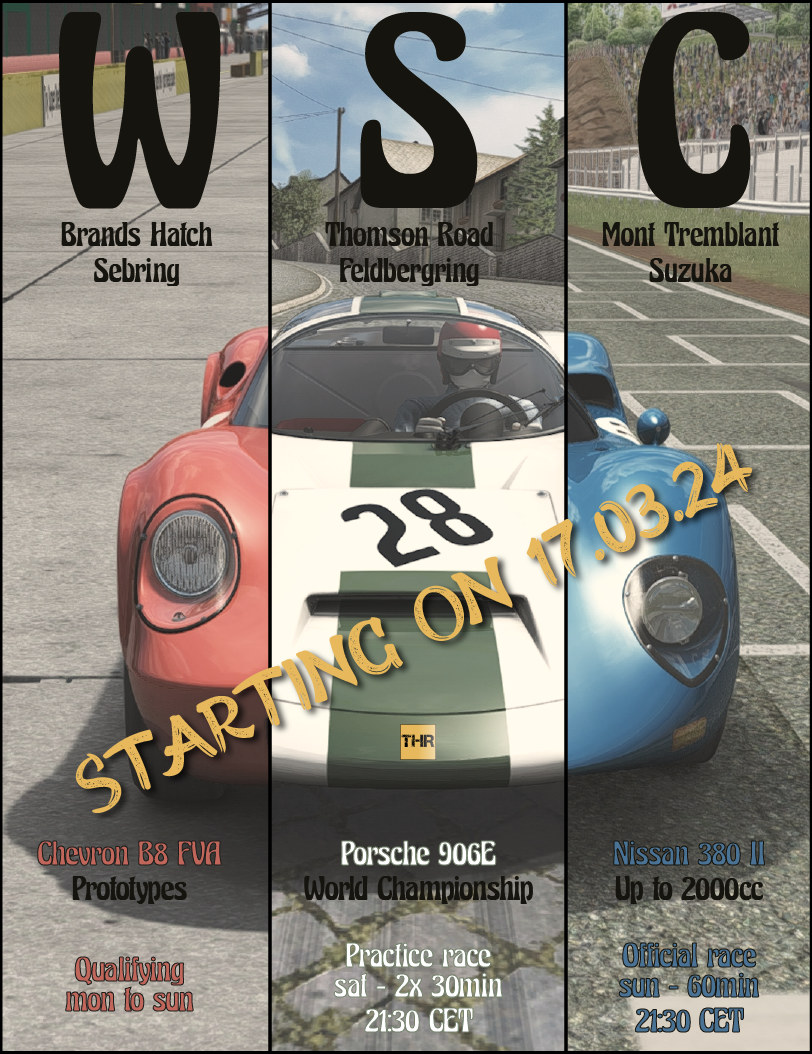
Axel Makes the Difference
Three victories and a second place gave Axel the WSCP2 - Casual Cup, but the route to the title was less straightforward than that return suggests. Emil Magnusson supplied the most sustained opposition in a five-round season shaped by changing fields, occasional winners and the shifting arithmetic of a discarded result.
A lead held in reserve
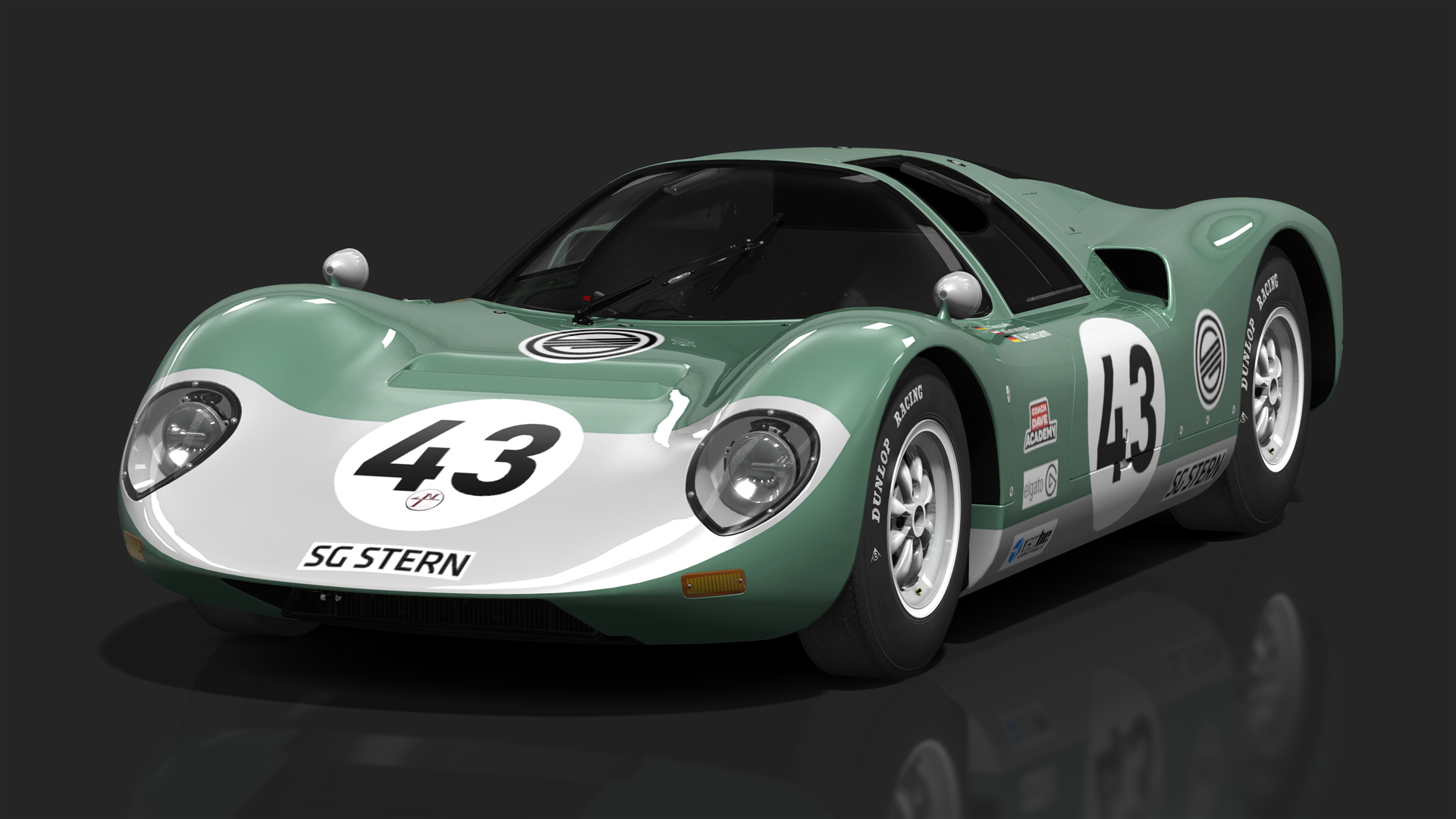
There was a clear distinction in this championship between winning a race and building a season. Several drivers made an immediate impression; fewer remained central to the argument. Axel combined the two requirements more effectively than anyone else. His Nissan R380 II was absent from Sebring, yet whenever it appeared it occupied one of the leading two places. The title rested not on attendance alone, nor on an accumulation of modest scores, but on the quality of the results he brought back.
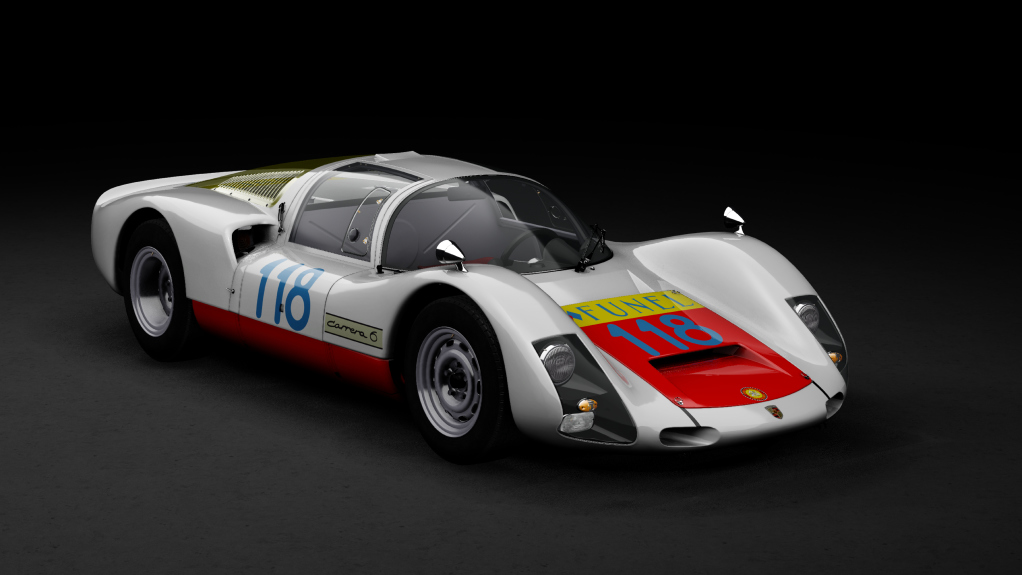
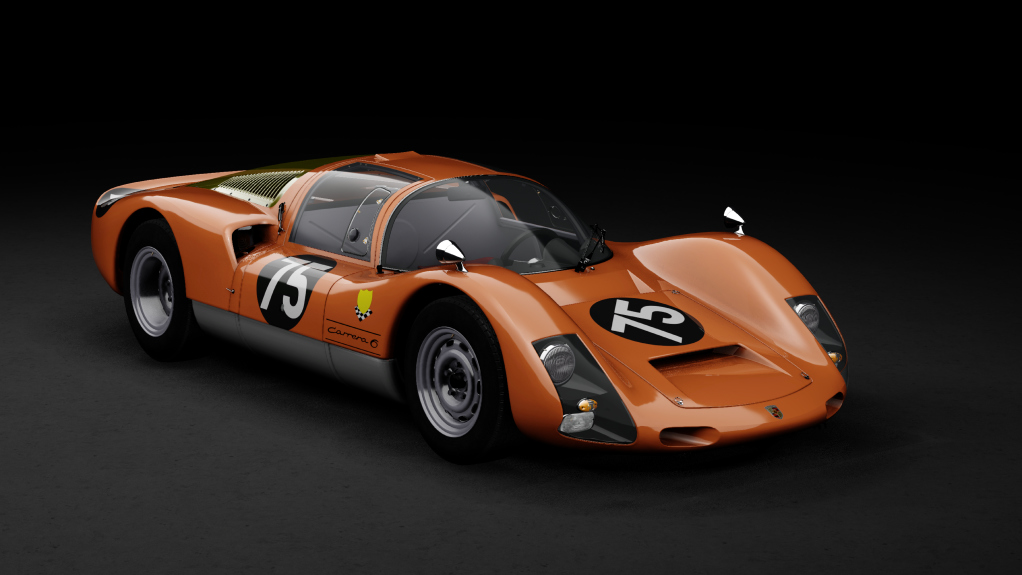
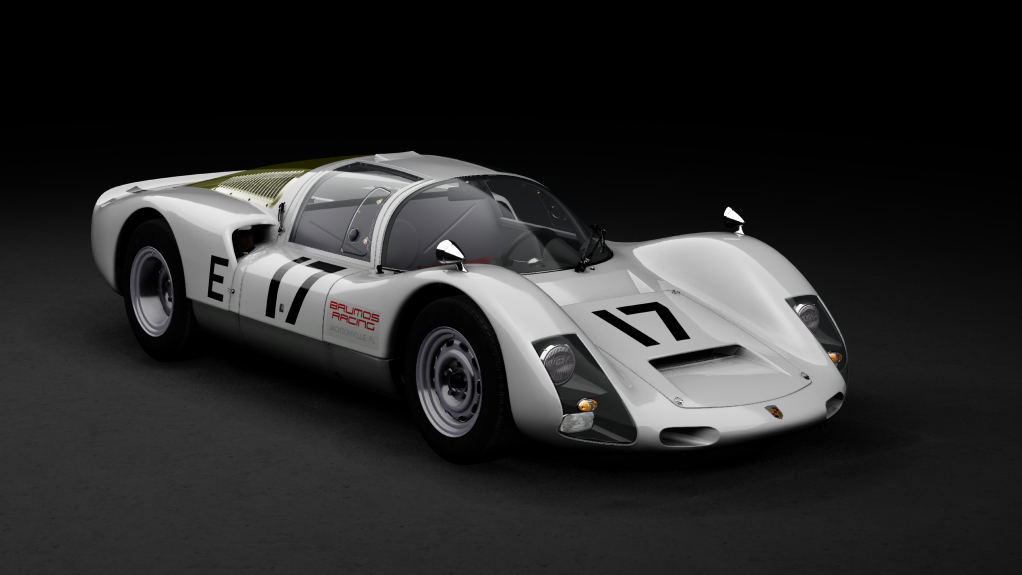
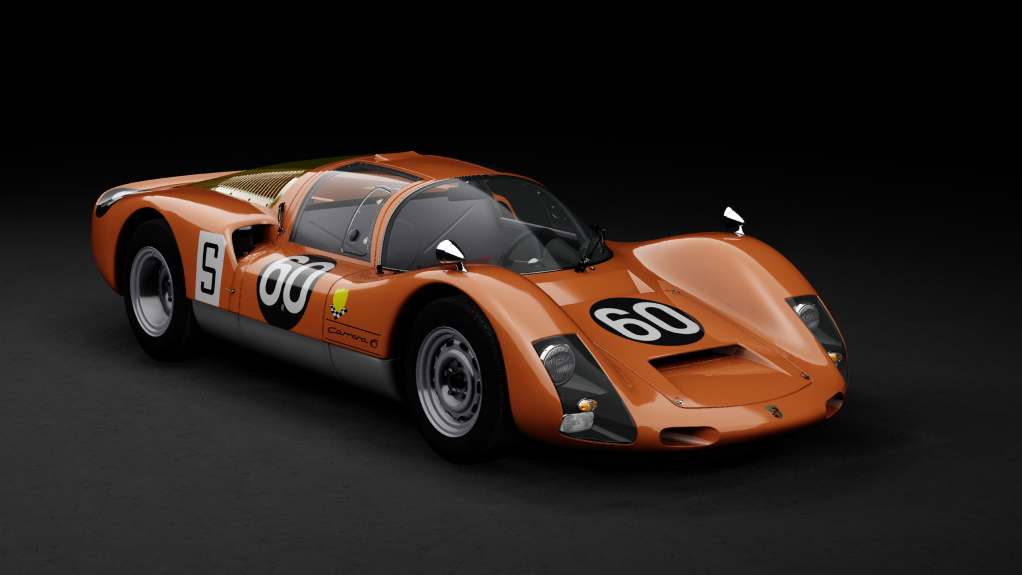
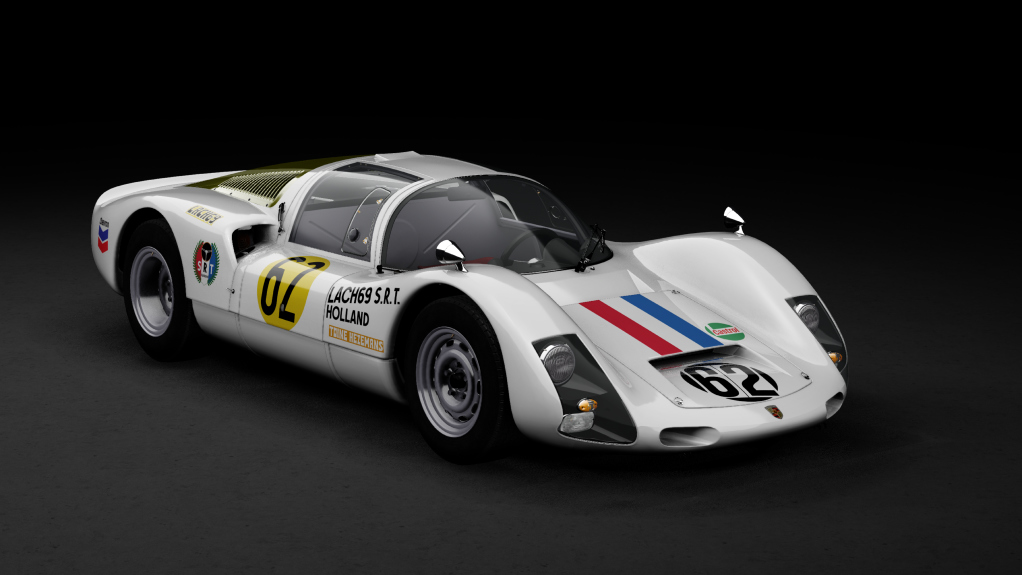
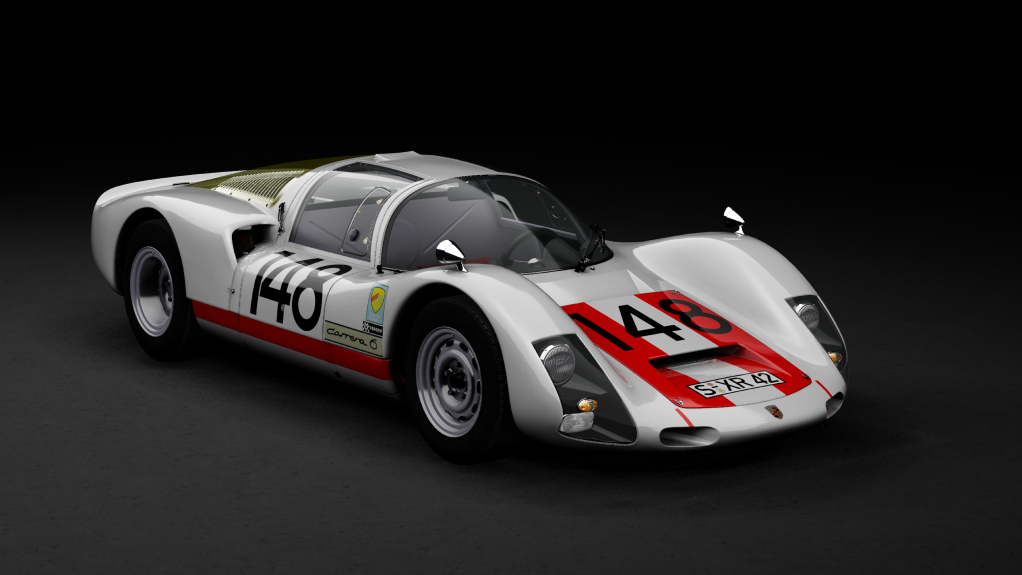
Brands Hatch established the principal comparison. Axel won, Emil Magnusson finished second in the Porsche 906 Carrera, and sebastian fariña brought another Porsche home third. Magnusson also recorded the fastest lap, an early indication that his challenge had substance beyond merely collecting the places left available. Axel nevertheless held the advantage that mattered: victory, and an opening Championship lead of three points.
The first complication came not from a reversal on the road but from the scoring system. Each driver could discard one worst event, leaving four counting rounds over the completed season. Its effect on the intermediate table was considerable. A useful score could lie outside a driver's counted total while an absent rival surrendered nothing further by dropping a zero. The standings therefore required a little more care than a simple addition of race points.
Sebring demonstrated this plainly. With Axel absent, Syd Drake won in a Chevron B8 FVA, ahead of Tom C. and Steve Hayward in similar cars. It was a complete Chevron podium, and an emphatic change from the Nissan-Porsche order of the opening race. Tom C. set the fastest lap, while Hayward's third place gave his season a much stronger footing.
Yet Axel remained joint leader with Drake on 40 points. Magnusson, fourth in the race, shared third in the Championship with Tom C. on 37 points: his 31-point Sebring result was then the discarded score. Axel's discarded event was his zero from the same meeting. The leader had missed a race, but the table had not yet charged him for it.
The challenge takes shape
The middle of the season separated the drivers capable of an isolated success from those assembling a broader campaign. Drake's Sebring victory remained his sole appearance. Tom C. likewise made his contribution in that one meeting. Their pace had altered the immediate order, but neither supplied the continuing pressure which the Championship leader would face from Magnusson and, increasingly, Hayward.
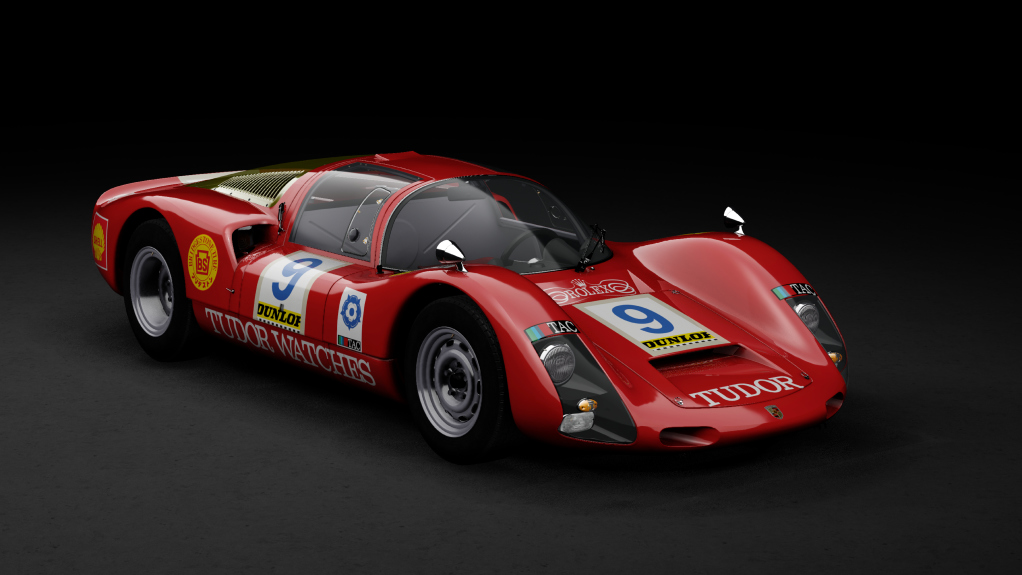
Thomson Road brought another successful visitor. Ingroover won in a Porsche 906 Carrera and set the fastest lap, with Axel finishing second. It was a valuable return for the Nissan driver after his absence: beaten on the day, he still secured a result substantially stronger than those of most of his regular opponents. There was no need for victory at every appearance if the alternative was second place.
Behind them, Hayward finished third for the second successive round. His recovery from ninth in the Brands Hatch classification had become one of the season's more important developments. The two consecutive third places gave him 68 counted points after Thomson Road, level with Magnusson in second in the Championship and nine behind Axel, who led on 77.
Those equal totals concealed different patterns. Magnusson had followed his opening second place with consecutive fourth places at Sebring and Thomson Road. He had remained near the front, but had not repeated the opening podium. Hayward, by contrast, was moving forward through his results. His Brands Hatch score was then discarded, leaving the two third places to carry his challenge. Magnusson was still discarding Sebring.
For fariña, the same phase was less productive. At Thomson Road he was classified sixth after completing 28 of the 29 laps, and that result became his discarded score at that point. His opening podium retained its value, but he was no longer matching the leading Nissan's returns.
The variety at the front was genuine. After Thomson Road, Nissan, Chevron and Porsche had one victory apiece. But the distribution among drivers was more revealing than the balance among cars. Axel had coupled his victory with a second place; the other race winners had each appeared once. That distinction was beginning to give the Championship its shape.
Quality at the sharp end
Feldbergring was the more consequential of the closing meetings because it renewed the direct comparison between Axel and Magnusson. The Nissan won, the Porsche finished second, and Axel also set the fastest lap. Magnusson had restored himself to the leading pair, but the order was the same as at Brands Hatch. When both men reached the front together, Axel had again taken the larger score.
The result left Axel leading the Championship on 117 points, with Magnusson second on 105, twelve points behind. Axel's record at that stage comprised two victories and one second place from three starts. Magnusson had two second places and two fourth places from four starts. Both had demonstrated consistency, but the Nissan driver's consistency was being exercised at a higher level of reward.
There was still a distinction between counted points and points already earned. Magnusson's 31 points from Sebring remained outside his total after Feldbergring, whereas Axel continued to discard his Sebring non-start. The twelve-point margin was the correct contemporary measure, but it was not a complete description of the results each driver held. That qualification matters in a season whose final table would restore previously excluded scores.
Feldbergring also sharpened the contest behind them. HeatCAN was classified third after completing 13 of the 14 laps in a Porsche, the strongest result of a three-start campaign. It would help secure fifth in the final Championship, on 88 points, close enough to the next two drivers to give the performance lasting significance.
Fariña was classified fourth after completing four laps. The result yielded no points and became his discarded event, bringing his earlier Thomson Road score back into his counted total. Hayward did not start, but his own discarded result changed to the Feldbergring zero. His Brands Hatch points consequently returned to the reckoning, placing him third in the Championship on 94 points.
Thus a small field produced changes extending beyond its leading pair. Axel strengthened his position by winning; Hayward strengthened his counted total without taking part. The contrast was an essential feature of this Championship, though it should not obscure the simpler competitive fact at its centre: Axel was turning his appearances into victories.
The final reckoning
Mont-Tremblant provided a sparse conclusion rather than a crowded last encounter. There were two classified drivers, and Magnusson was absent. Axel completed the 32 laps to win again, while chitibangbang36 was classified second after completing 31 laps in a Porsche 906 Carrera. Axel also recorded the fastest lap. The scale of the field qualified the occasion, but not the value of the result in completing his campaign.
The final accounting put Axel on 157 points and Magnusson on 136, a margin of 21. Magnusson's total rose despite his absence because Mont-Tremblant's zero became his discarded event, restoring the Sebring score previously left out. Axel's final discarded result remained his Sebring non-start. Neither man's completed-season total therefore lost points earned in a race; the changing discard had chiefly complicated the route by which the table reached its final order.
Viewed as a whole, the champion's return was persuasive: three wins and one second place from four starts, four top-two results in total. Magnusson's two second places and two fourth places made a sound runner-up campaign, but there was no victory to set against Axel's repeated successes. His fastest lap at Brands Hatch showed that speed was present. The season's decisive difference lay in converting front-running pace into the highest places.
Hayward retained third with 94 points, just one ahead of fariña. His two third places had supplied the substance of that achievement, turning an unpromising opening classification into a place on the final Championship podium. Nissan, Porsche and Chevron were consequently all represented among the leading three drivers, a fitting reflection of the variety seen during the season.
There were memorable contributions beyond those three, particularly the victories of Drake and Ingroover. Yet the Championship belonged to the driver who made success repeatable. Against a changing cast and a table that sometimes concealed as much as it revealed, Axel supplied the clearest continuing standard.
Axel was a deserving champion, his three victories supported by a second place whenever victory escaped him. Emil Magnusson earned the runner-up position through a consistently strong Porsche campaign, while Steve Hayward's two third places carried him to third in the final standings. It was a season of varied winners and uneven participation, settled by the driver whose best results became a habit.