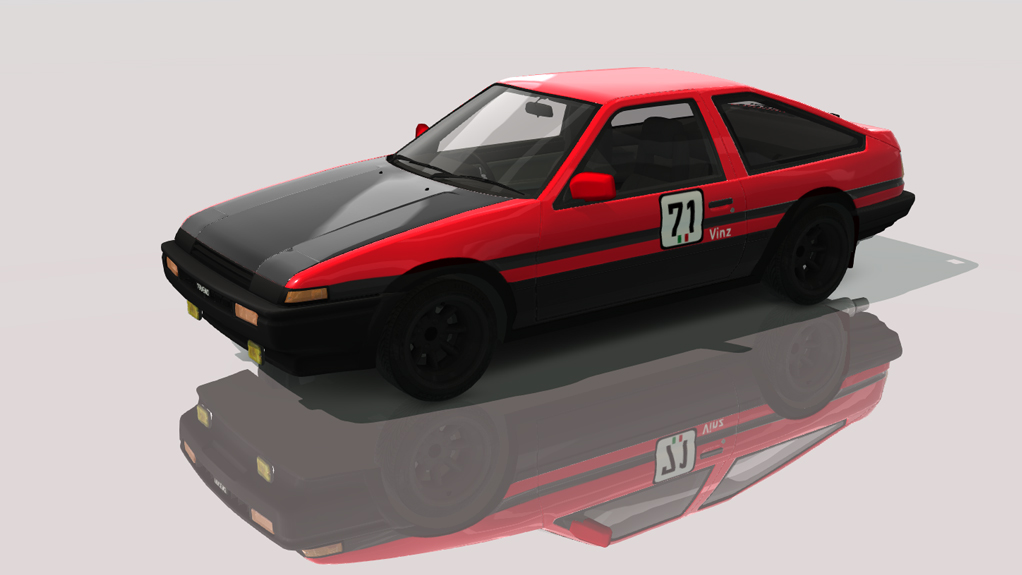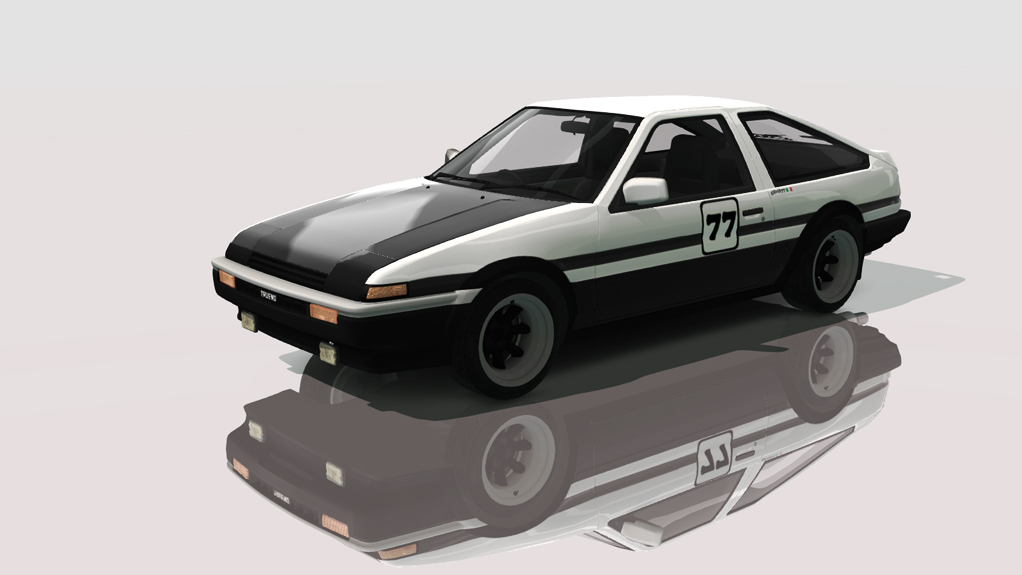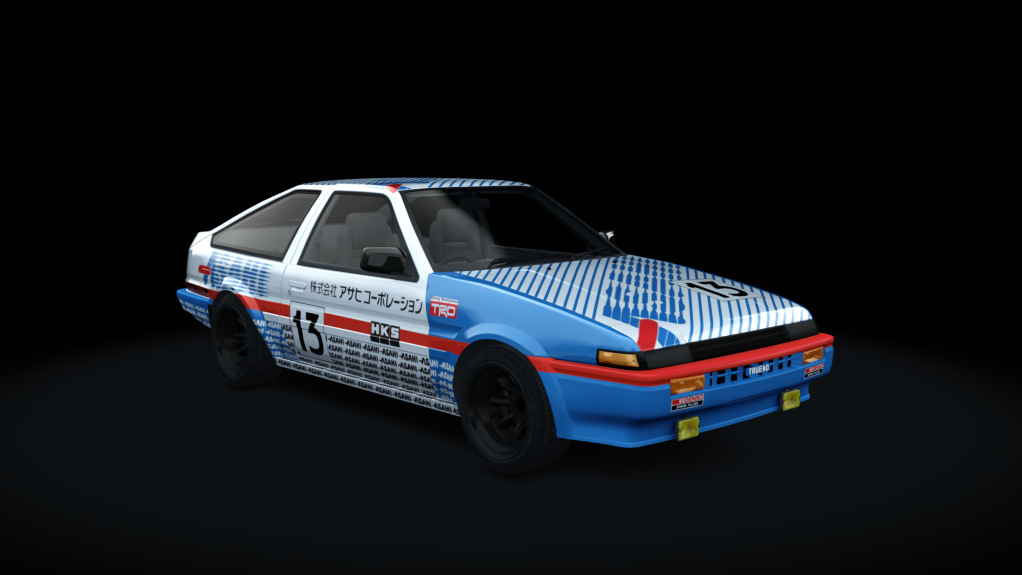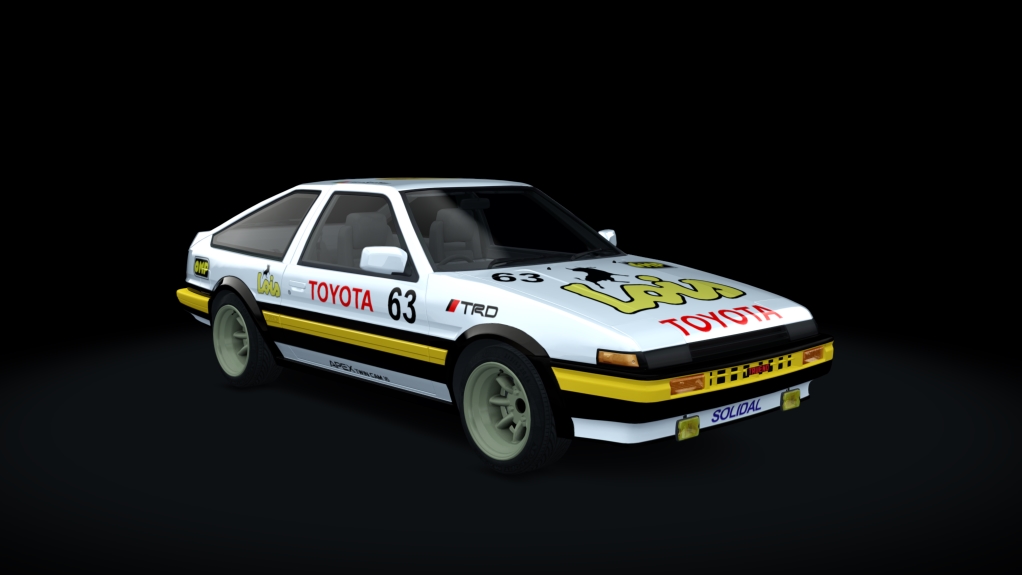
SummerTime Cup: FMG Sets the Measure
Eight victories gave FMG a convincing SummerTime Cup title, but the course of the Championship was less straightforward than the winning total suggests. Valentin Knechtel supplied the sustained challenge, Ayrton Titos rose steadily into third, and Jaroslav Cerny made the latter half of the season a rather different contest from its beginning.
An advantage established, not surrendered
The SummerTime Cup compressed its business into six meetings and twelve races, from Barbagallo in July to Tsukuba in August. In the Toyota AE86 THR Academy, FMG established the standard immediately and remained at the head of the Championship after every round. Yet this was not simply a matter of collecting an early advantage and administering it. The opposition acquired strength as the summer proceeded, and the scoring system gave the points table a rhythm of its own.
Each driver's poorest meeting was discarded, leaving five to count in the completed season. That distinction between a race and a meeting mattered: a victory in one half of an evening could be accompanied by a less profitable result in the other, while an absence could become the discarded score. The identity of the result left out changed as the season developed. Consequently, the table did not always move in the manner suggested by the latest pair of results.
FMG's particular strength was that he supplied complete winning meetings at both ends of the campaign. Between them came a broader contest, with Marc Orós breaking his sequence, Cerny becoming a regular occupant of the leading places, and Knechtel and Titos taking their opportunities in Australia. The champion's authority survived these interruptions because his best evenings were so much more productive than merely respectable ones.
The opening standard
Barbagallo established both the leader and the initial shape of the pursuit. FMG won twice, with fastest lap in each race, while Florian Masse and Valentin Knechtel exchanged second and third places behind him. FMG left the opening meeting on 80 points; Masse and Knechtel shared second in the Championship on 71. The immediate distinction was plain enough. The leader had converted his speed into victories, while the two nearest challengers had divided the places below him.
Castle Combe confirmed the winning pace without producing the expected expansion of the counted advantage. FMG again won both races, bringing his opening sequence to four consecutive victories. With Barbagallo then the discarded meeting in his calculation, however, his counted total remained 80. Knechtel and Masse remained on 71, joined at that figure by meisterJaeger, whose second and third places at Castle Combe made a substantial impression in a brief appearance.
This early table required a little interpretation. It showed a nine-point lead, but FMG had already produced two equally valuable meetings. His rivals' position depended upon rather different combinations of results. Knechtel recovered from seventh in the opening Castle Combe race to finish second in the next. Masse's promising start, by contrast, was followed by a difficult second meeting: he was classified 15th in its second race after completing ten laps. Castle Combe was then his discarded event.
Masse's campaign went no further. His opening performances remained a useful indication of the competition FMG had overcome, but Knechtel became the continuing reference among the pursuers.
The opposition takes shape
Grobnik supplied the first substantial change in the racing pattern. FMG won the opening race, but Orós took the second, with Titos second and Knechtel third. FMG was classified fifth in that race. The uninterrupted success of the opening meetings was over, and Orós had supplied a victory to accompany the useful results with which he had begun the season.
The points consequence was more favourable to FMG than the interruption alone might suggest. Grobnik's 70 points became his discarded meeting, allowing both opening scores to count. He now led the Championship on 160 points, with Knechtel second on 142 and Orós third on 133. Knechtel had finished second and third in Croatia, bringing his record at that stage to five podium appearances from six starts. His challenge was founded upon repeated high placings; the missing element remained a victory.
For Titos, Grobnik was the foundation of a sustained advance. Having joined the season at Castle Combe, he finished third and second in Croatia. He was no longer simply adding points after a late beginning, but appearing regularly among the men who determined how those points were distributed.
Cerny also entered the racing picture at Grobnik, with classifications of sixth and fourth. Those results did not yet announce the extent of his later influence. They did, however, introduce another driver who would soon stand between the established leader and an uncomplicated afternoon.
Luccaring and the changing value of a score
At Luccaring, Cerny won the opening race ahead of FMG and Orós. FMG answered with victory in the second, Cerny finishing second and Titos third. The division of honours was important. Cerny had become a winner, but FMG had met the new opposition with a second place and a victory rather than allowing the meeting to become a serious reverse.
Knechtel was absent, and the discarded-score rule now changed the composition of his total. His zero from Luccaring replaced Castle Combe as the result left out. He remained second in the Championship on 207 points, 30 behind FMG's 237. The absence therefore had a less abrupt effect upon the counted table than an empty evening might ordinarily imply, although FMG had still enlarged his advantage.
Orós had a more uneven meeting. After finishing third in the opening race, he was classified eighth in the second after completing ten laps. Luccaring's 61 points became his discarded score, and he stood third in the Championship on 195. Titos, with fourth and third places in the races, had accumulated 194 counted points. Their totals were now very close, setting up a contest which would retain its importance to the final evening.
Luccaring thus marked a useful dividing line. FMG had answered a new race-winning rival, Knechtel's challenge had survived an absence through the changing drop calculation, and the competition behind them had drawn together. The season was becoming more varied without yet becoming less favourable to its leader.
An Australian interruption
Oran Park gave the pursuers their clearest opportunity. Knechtel won the opening race, at last adding a victory to his sequence of leading places. Titos won the second. Cerny finished second in both, while Orós finished third in both. FMG was classified fifth in each race, a conspicuously modest return beside the standards he had established.
There was still speed in the leader's Toyota: he set fastest lap in the second race. But on this occasion pace and reward were not closely aligned. His rivals occupied the positions that mattered, and the evening belonged to the breadth of the opposition rather than to the man at the head of the table.
The scoring rule again moderated the visible change. Oran Park's 60 points replaced Grobnik's 70 as FMG's discarded meeting, and his counted total rose to 307. Knechtel stood second on 278, reducing the deficit to 29 points. For all the contrast in their Australian results, the gap had narrowed by just one point from the previous round.
The more substantial movement was Titos's ascent to third in the Championship on 265 points. Orós had 263 counted points, making their contest especially close before Japan. Cerny's pair of second places also extended his immediate run to three consecutive seconds. He was taking a regular share of the leading positions, though his later start left his Championship total some way removed from the scale of his current performances.
FMG therefore approached the last meeting with a useful advantage, but with the racing initiative interrupted. Tsukuba would show whether Oran Park represented a passing shortfall or a lasting alteration in the order.
The answer at Tsukuba
FMG answered with two victories. Cerny finished second in each race, while Orós took third in the first and Titos third in the second. Knechtel finished fourth twice. There was no change of Championship leader and no uncertain final verdict: FMG secured the title with 387 points, Knechtel taking second with 340 and Titos third with 329.
The first Tsukuba race offered a neat distinction between speed over a lap and the result over a race. Orós set fastest lap, with Cerny's best and FMG's best scarcely slower, yet FMG won. In the second race the champion also supplied fastest lap. His final meeting restored the winning pattern with which the summer had begun.
Titos retained third in the Championship by three points over Orós. Orós's opening podium in Japan was followed by a classification of sixth after completing 21 laps in the second race. His completed season contained one victory and five third places, six podium appearances in all, but Titos's combination of a victory, a second place and three thirds proved the more productive Championship campaign.
Cerny ended with five consecutive second places. Together with his Luccaring victory, those gave him six top-two results from eight starts. Sixth in the final Championship on 285 points did not convey the prominence of his closing performances. Max Solmyr took fifth overall on 288, a useful result from a campaign conducted below the podium places.
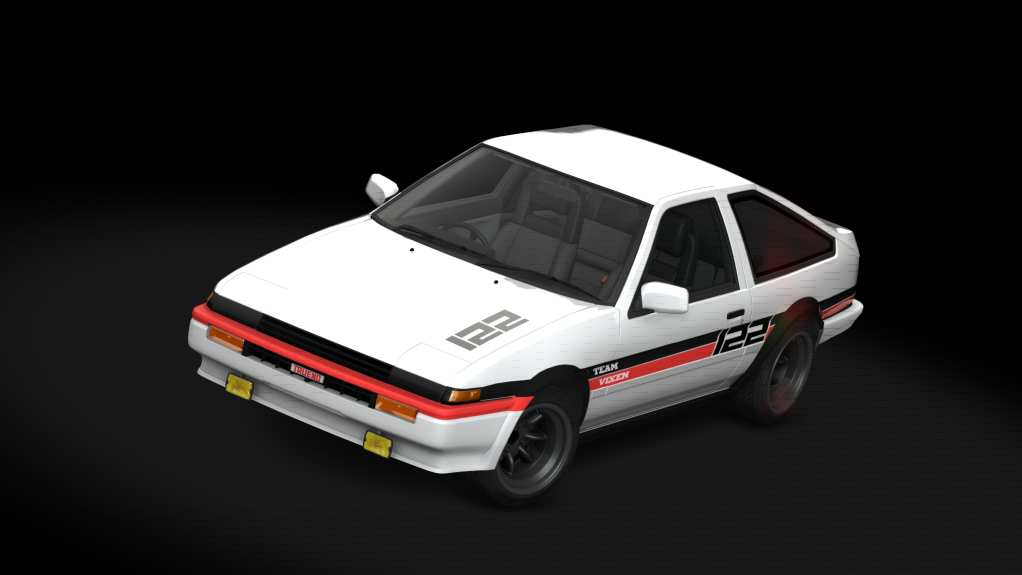
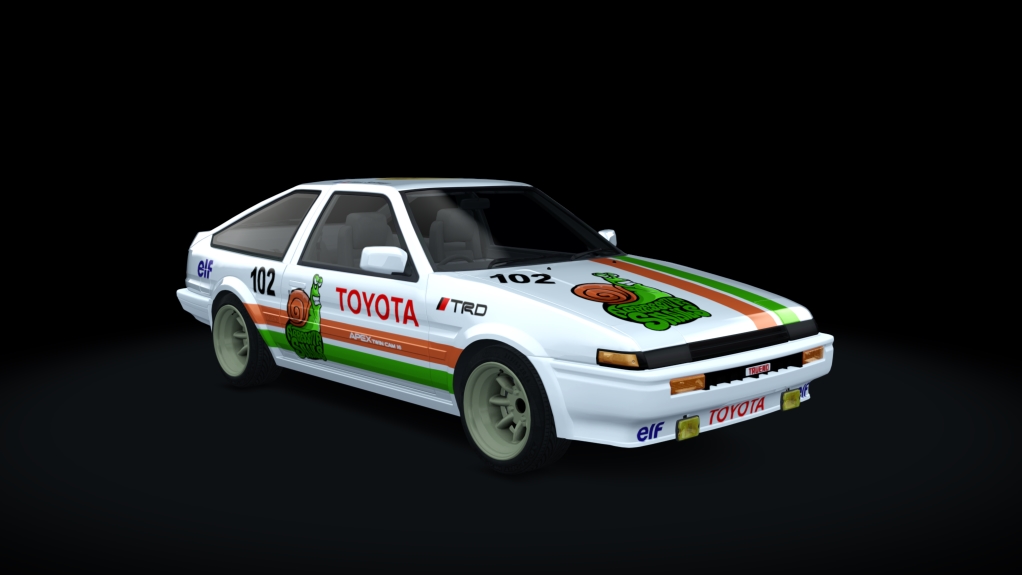
There was a separate distinction in the teams' classification. Side Heart Motorsports won with 341 points, just one ahead of THR Axis of Orga, while Aggressive Snails took third. The drivers' champion, representing Vixen Racing Cars Ltd, did not carry his team to the corresponding title.
FMG's final account was eight victories and one second place, nine top-two results from twelve starts. His 447 points before discards became 387 when Oran Park's 60 were removed; Knechtel's discarded meeting was his Luccaring absence. The rule shaped the progression, but the champion's chief distinction remained the frequency with which he won. Knechtel sustained the pursuit, Titos made sound progress, Orós broke the early monopoly and Cerny gave the closing races their persistent counterweight. Against that increasingly capable company, FMG finished the summer as he had begun it: setting the result others had to answer.