Shepherd Takes the Cup as Kraus's Early Advantage Falls Away
Philip Kraus set the pace in the GT 40s Americas Cup, winning at Watkins Glen and Riverside. Maddie Shepherd, however, sustained a challenge across the whole campaign and settled the Championship with victory at Sebring. In a compact season, speed established the order, but continuity decided the honours.
The distinction between winning and winning the Cup
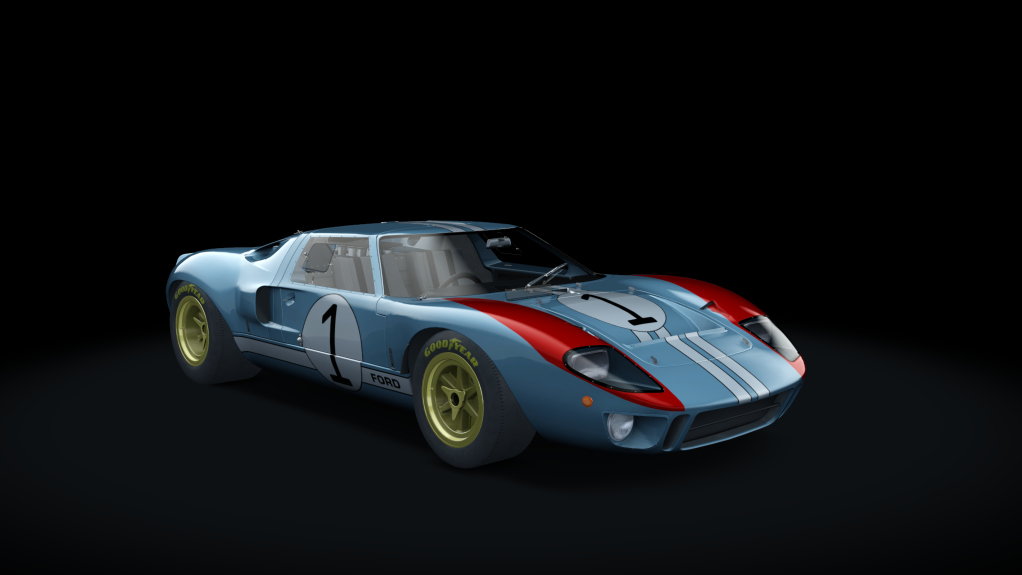
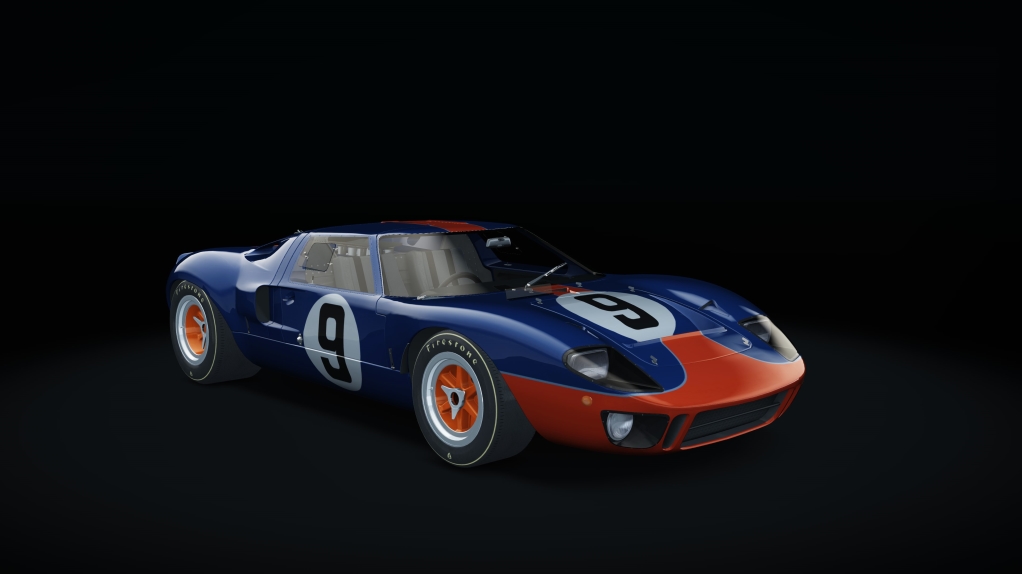
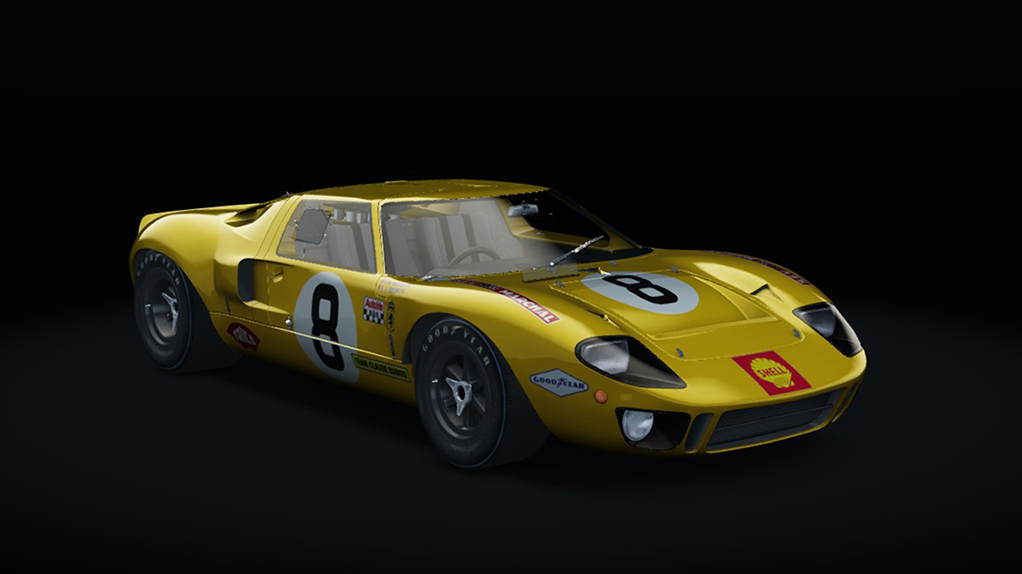
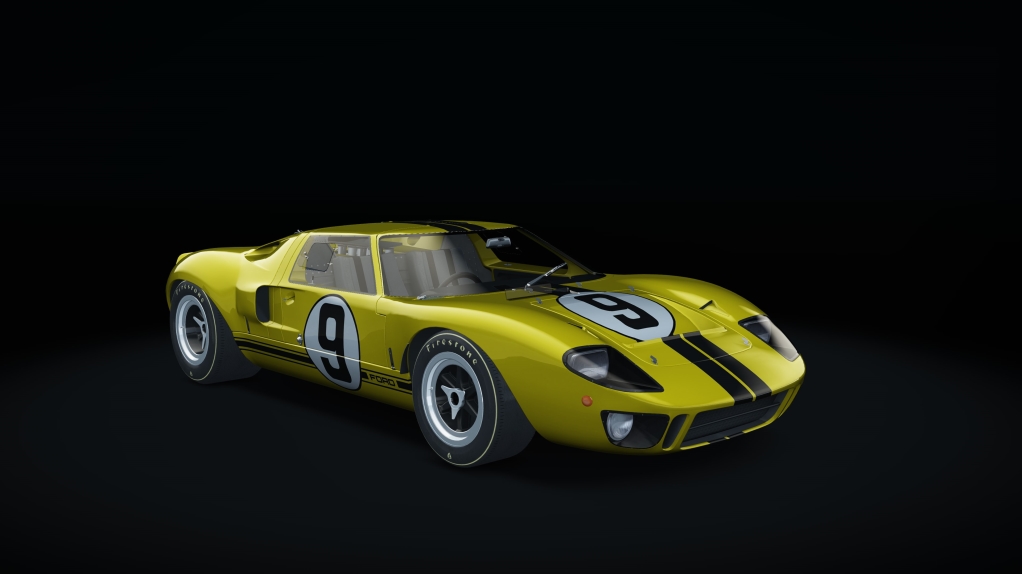
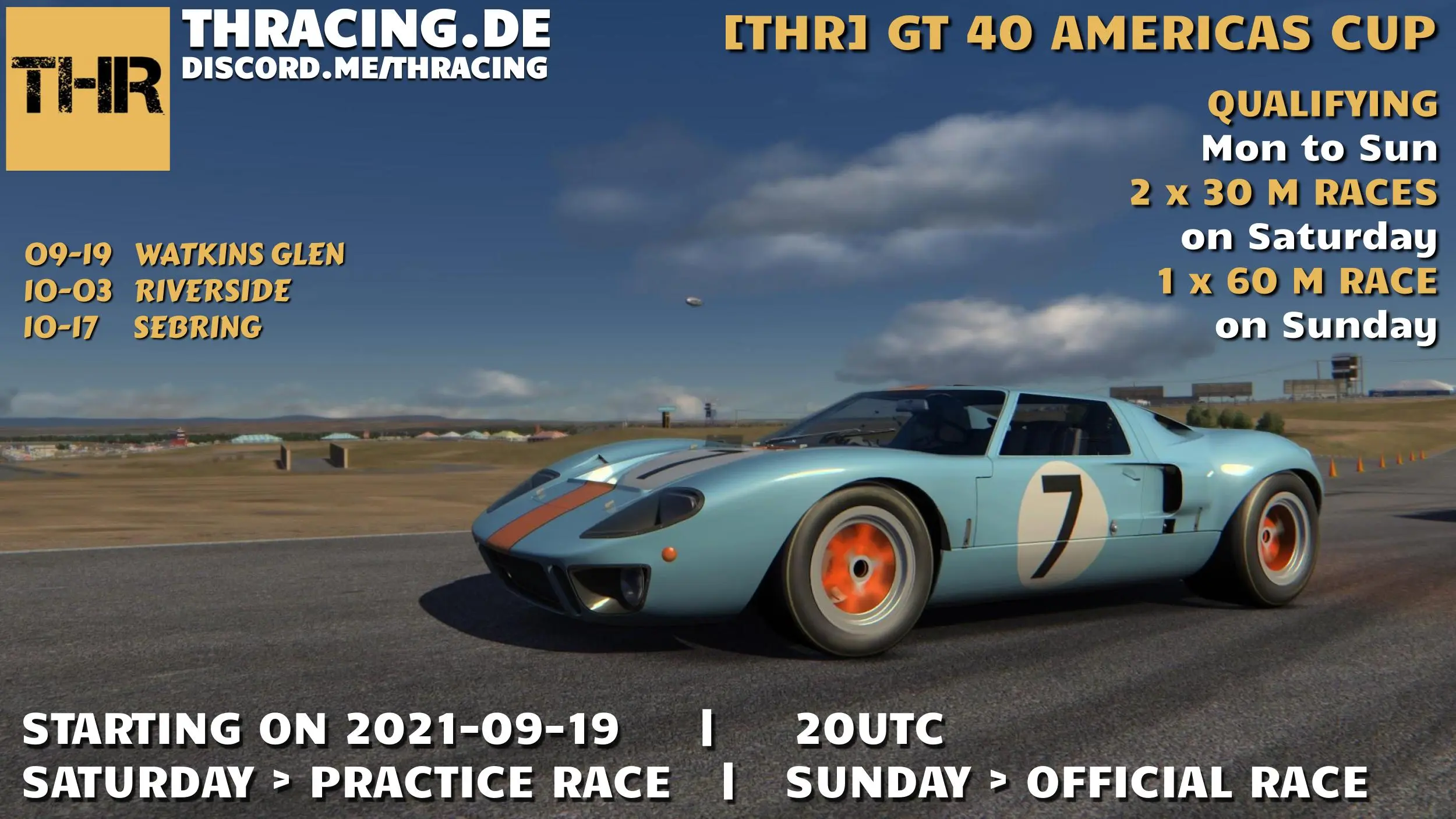
Three races, spread over four weeks, gave the GT 40s Americas Cup little room for a leisurely development. An advantage could be established quickly, but there were few opportunities to repair an incomplete campaign. The Ford GT40 provided the common instrument; the distinction lay in what each driver could make of the short programme. Kraus supplied the strongest opening, Shepherd the most complete season, while margar17 and Valentin Knechtel showed how much could be accomplished without a place on a race podium.
The final classification placed Shepherd first with 99 points, margar17 second with 80 and Knechtel third with 76. Kraus, winner of the opening two races, was fourth on 72. That contrast contains much of the season's character, though it should not obscure the quality of the champion's work. Shepherd's results were not merely a collection of useful scores gathered behind a faster rival. Third place became second, and second became victory. The Cup was won by maintaining a high standard and then raising it.
All three rounds counted. There was no discarded result to soften an absence or remove an inconvenient score from the reckoning. Kraus's two victories remained an imposing achievement, but his season comprised two starts. Shepherd contested the complete programme, taking one win, one second place and one third place. Those three podium results gave the campaign both substance and progression.
Nor did the final table simply preserve the hierarchy seen at the front of the early races. The two drivers immediately behind the champion had built their positions through less conspicuous work. The outcome therefore had two related stories: Shepherd's advance from regular podium contender to race winner, and the accumulation which carried margar17 and Knechtel above drivers whose strongest appearances had been more striking.
Kraus establishes the standard
Watkins Glen and Riverside formed a single, persuasive opening statement from Kraus. He won both races and set the fastest lap in each. There was nothing tentative about that beginning: over the opening phase, the leading standard belonged to him, and the rest were obliged to measure their progress against it.
At Watkins Glen, JackCY finished second and Shepherd third. Kraus emerged with 36 Championship points, while Shepherd held third in the Championship on 30, six points behind the leader. Shepherd had secured a sound beginning, but the result was still one of pursuit rather than command. JackCY's runner-up appearance was a substantial performance in its own right, although it remained a single-start contribution to the season.
Riverside strengthened Kraus's position. His second successive victory took him to 72 points, and the fastest lap again reinforced the impression made by the result. Shepherd finished second, with Nik Likar third. The principal change was not at the head of the table but immediately behind it: Shepherd now stood second in the Championship on 63 points, nine behind Kraus. A better race placing had brought a better Championship position, yet the deficit to the leader had grown.
That was the important tension before the final round. Shepherd's progress was plain, but Kraus was still converting his appearances into victories. Two podiums from two starts had kept Shepherd close enough for the season to remain unsettled; they had not arrested the leader's advance. The challenge was becoming more substantial without yet producing a reversal.
Likar also emerged from Riverside with a meaningful position. Fifth at Watkins Glen and third at Riverside placed him third in the Championship on 56 points, seven behind Shepherd and 16 behind Kraus. His improvement added another strand to the leading group, although his campaign, like Kraus's, would consist of the opening two races. The early order was consequently strong on achievement but not yet secure against the effects of the remaining round.
Sebring changes the balance
The decisive change came at Sebring, where neither Kraus nor Likar started. Their earlier points remained, but there would be no addition to them. The distinction mattered greatly in so short a Championship: the leading name before the final meeting could no longer influence the result on the road.
Shepherd answered with a victory rather than a modest consolidation. Over the 27-lap race, the eventual champion also recorded the fastest lap. It was a fitting change of emphasis after the opening rounds, in which Kraus had combined both distinctions. Shepherd had spent the earlier phase improving within the podium places; at Sebring, that progression reached the front.
Davide Ricciardi finished second and gilvil77 third. Their presence gave the final race a different complexion from the opening pair, but Shepherd's result was the one which altered the Championship lead. The victory brought the new champion's total to 99 points. The final margin over margar17 was 19 points, with Knechtel another four points back.
It would be misleading to treat this merely as the inheritance of an absent leader's position. Kraus's absence was central to the change, but Shepherd supplied the strongest possible race result and the fastest lap as well. The opening podiums had preserved the challenge; the final victory gave the completed season an authority of its own.
Sebring also demonstrated the difference between a race podium and a place among the Championship's leading three. Ricciardi's second place came in a single start, while gilvil77's third was the chief distinction of a two-start campaign. Both deserved notice for the final meeting. Behind them in the race, however, Knechtel and margar17 were completing the work which secured their higher positions in the overall reckoning.
The quieter strength of the final order
Margar17's runner-up Championship position rested on a particularly compact sequence: classified fourth at Watkins Glen, fourth at Riverside and fifth at Sebring. There was no race podium, but equally no large variation in the placings. Across a programme in which every round counted, that regular presence near the front proved more valuable than an isolated higher result followed by an incomplete schedule.
The opening fourth places were especially useful in establishing the shape of that campaign. While the podium occupants changed around Kraus and Shepherd, margar17 repeated the same classification. Fifth at the final round maintained the pattern closely enough to secure 80 points and second in the Championship. It was a season of steady accumulation rather than a late transformation.
Knechtel's route to third overall was different. Classified seventh at Watkins Glen, sixth at Riverside and fourth at Sebring, Knechtel improved at every meeting. The final race placing was the strongest of the campaign and helped secure 76 Championship points. Neither Knechtel nor margar17 recorded a podium, yet both occupied places in the final Championship top three, all three of whom drove the Ford GT40.
Their achievement throws Kraus's fourth place into sharper relief without diminishing his victories. He won both races he entered, and his pace was supported by the fastest lap on each occasion. What the completed table lacked was a third contribution from him. Likar likewise retained the value of a good opening phase but ended sixth overall on 56 points. Between them, Mika Hakala took fifth in the final standings with 69.
The lesson was not that regularity alone outweighed speed. Shepherd possessed both, while margar17 and Knechtel supplied contrasting examples of sustained scoring: one through closely grouped results, the other through steady improvement. The final order rewarded those complete campaigns, but the champion's advantage came from operating at the sharper end throughout.
Kraus left the clearest impression on the opening phase; Maddie Shepherd gave the season its resolution. The champion combined three podium results with a final-round victory, while margar17 ended as runner-up and Valentin Knechtel completed the Championship podium in third. In a Cup too short to allow much recovery, Shepherd kept the challenge intact and completed it with a winning performance.